
Kenza Abboud
Research and Program Assistant
On the occasion of International Women’s Day on March 8, the Nordic Center for Conflict Transformation (NCCT) organized a training session in Tangier on the fundamentals of e- commerce and digital marketing under the framework of the ReOrient project. The workshop aimed to strengthen women’s entrepreneurial capacities and promote economic independence through digital engagement.
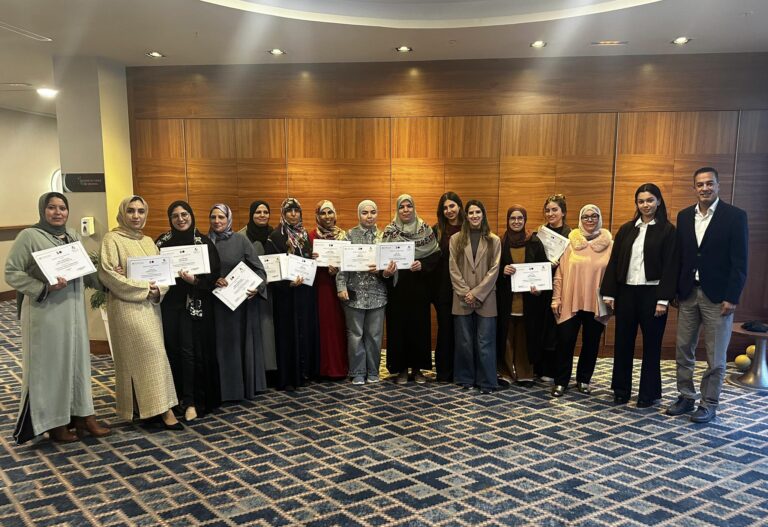
The session brought together mothers from Tangier and Tetouan, several of whom were accompanied by their daughters, eager to develop their digital skills and explore opportunities in online entrepreneurship. Their participation reflected a growing trust in NCCT’s initiatives and underscored the intergenerational interest in digital economic opportunities.
Many of the participating mothers had previously engaged with NCCT’s Oum Action program, where they received training to support youth violence prevention and contribute to social and economic development within their communities. Building on this experience, their continued involvement positions them as key community actors within the ReOrient project, funded by the government of the Kingdom of the Netherlands and which works to strengthen community-based approaches to rehabilitation and reintegration.
Opening the workshop, Noufal Abboud, Executive Director of NCCT, reflected on the seven- year journey of the Oum Action program and its evolution alongside the rapid digitalization of commerce. He highlighted the symbolic significance of holding the training on International Women’s Day, stressing the importance of equipping women with the knowledge and tools necessary to engage confidently in the digital economy.
The training was delivered by NCCT’s IT and Media Specialist, Said Jabouri, who guided participants through the fundamentals of online entrepreneurship. Through interactive discussions and practical exercises, the team assessed how participants currently perceived online platforms in order to identify knowledge gaps and areas for development.
Several participants shared that they were already involved in small-scale reselling activities online but faced challenges such as unstable profit margins and uncertainty regarding the transparency and sustainability of digital marketplaces. The training addressed these concerns by introducing participants to the core principles of e-commerce strategy, digital marketing, and audience engagement.
Mr. Jabouri presented practical tools to help participants identify profitable niches and micro- niches, emphasizing products that respond to everyday needs and clearly target specific audiences. The session also explored the importance of personal branding and professional online presence, encouraging participants to recognize and communicate the value they bring as emerging digital entrepreneurs. Recognizing that some participants faced difficulties with content creation and presentation, the training also introduced artificial intelligence tools that can support marketing and communication strategies, making digital entrepreneurship more accessible.
To illustrate successful models, the session examined examples of women digital entrepreneurs, analyzing their marketing techniques, content formats, and audience engagement strategies. Participants collectively discussed how these creators capture attention and build sustainable online businesses. This exercise encouraged participants to reflect on how similar approaches could be adapted to their own entrepreneurial ideas.
The workshop concluded with closing remarks by Mr. Abboud, who encouraged participants to focus on future opportunities and remain proactive in pursuing their entrepreneurial ambitions. He emphasized that every step taken toward opportunity contributes to meaningful and lasting success.
Participants concluded the session by sharing words of appreciation, highlighting the practical tools and insights gained during the workshop and expressing their determination to translate these lessons into concrete business initiatives.