Afifa Kallouh
Program Coordinator – NCCT
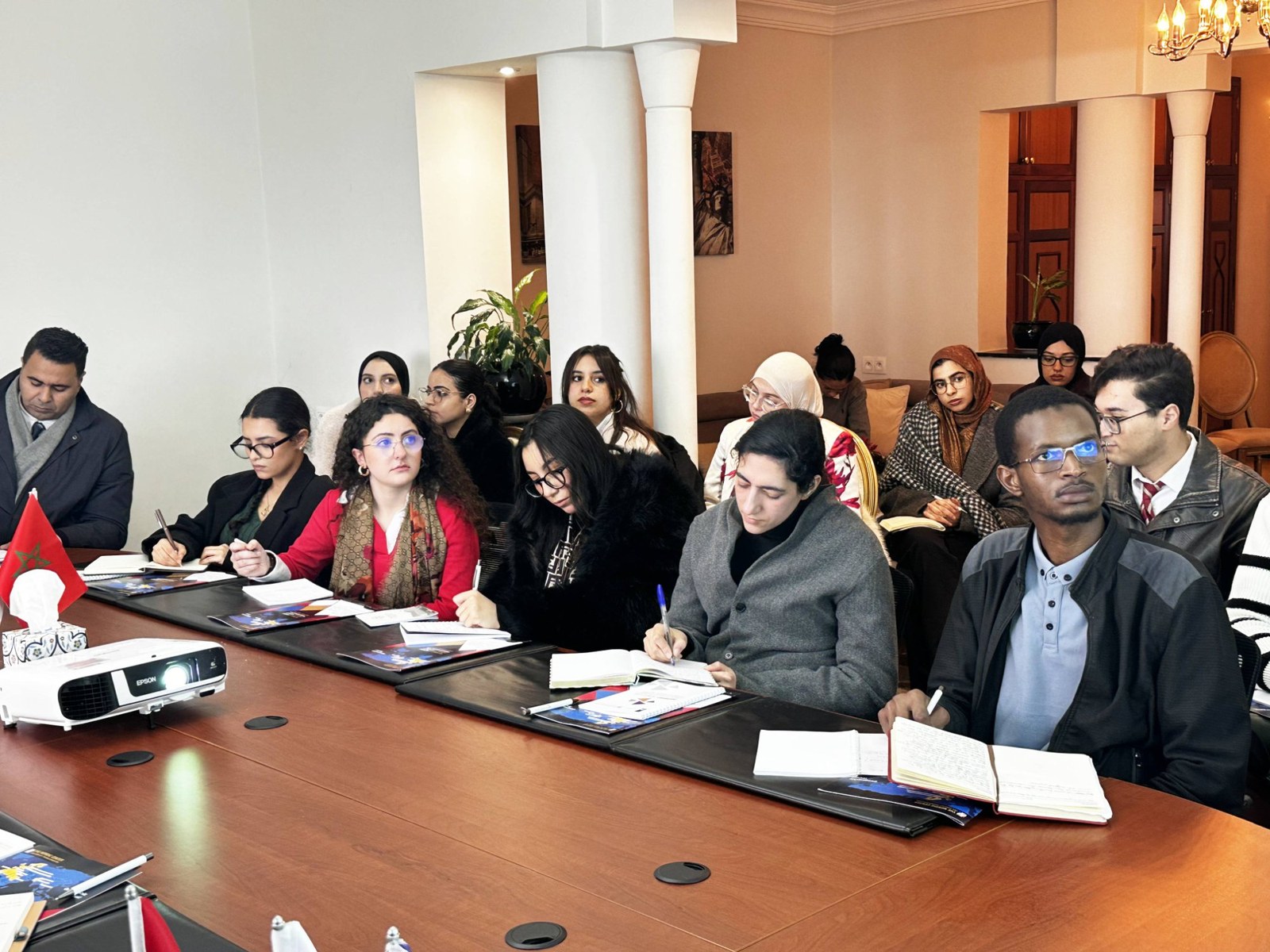
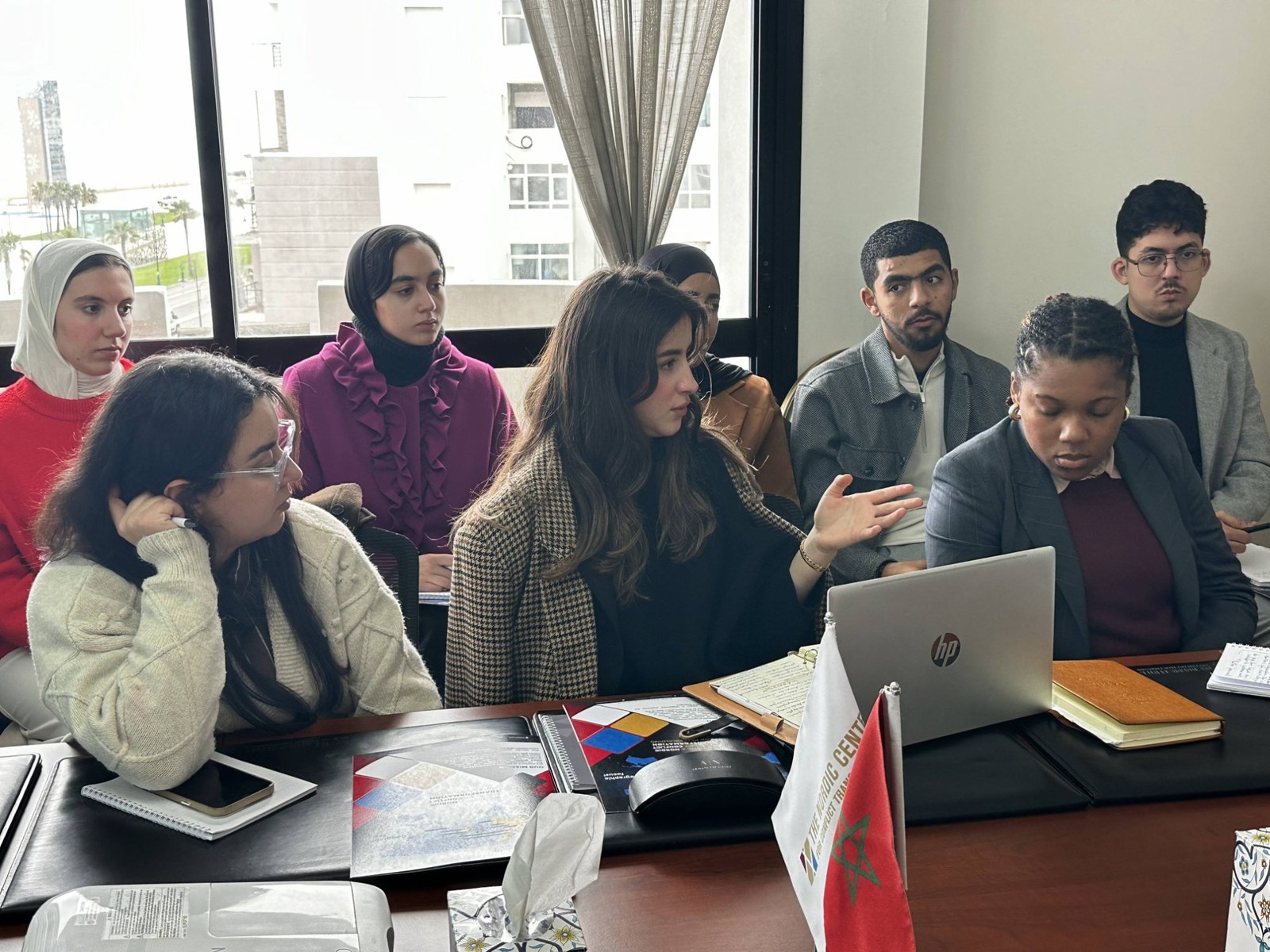
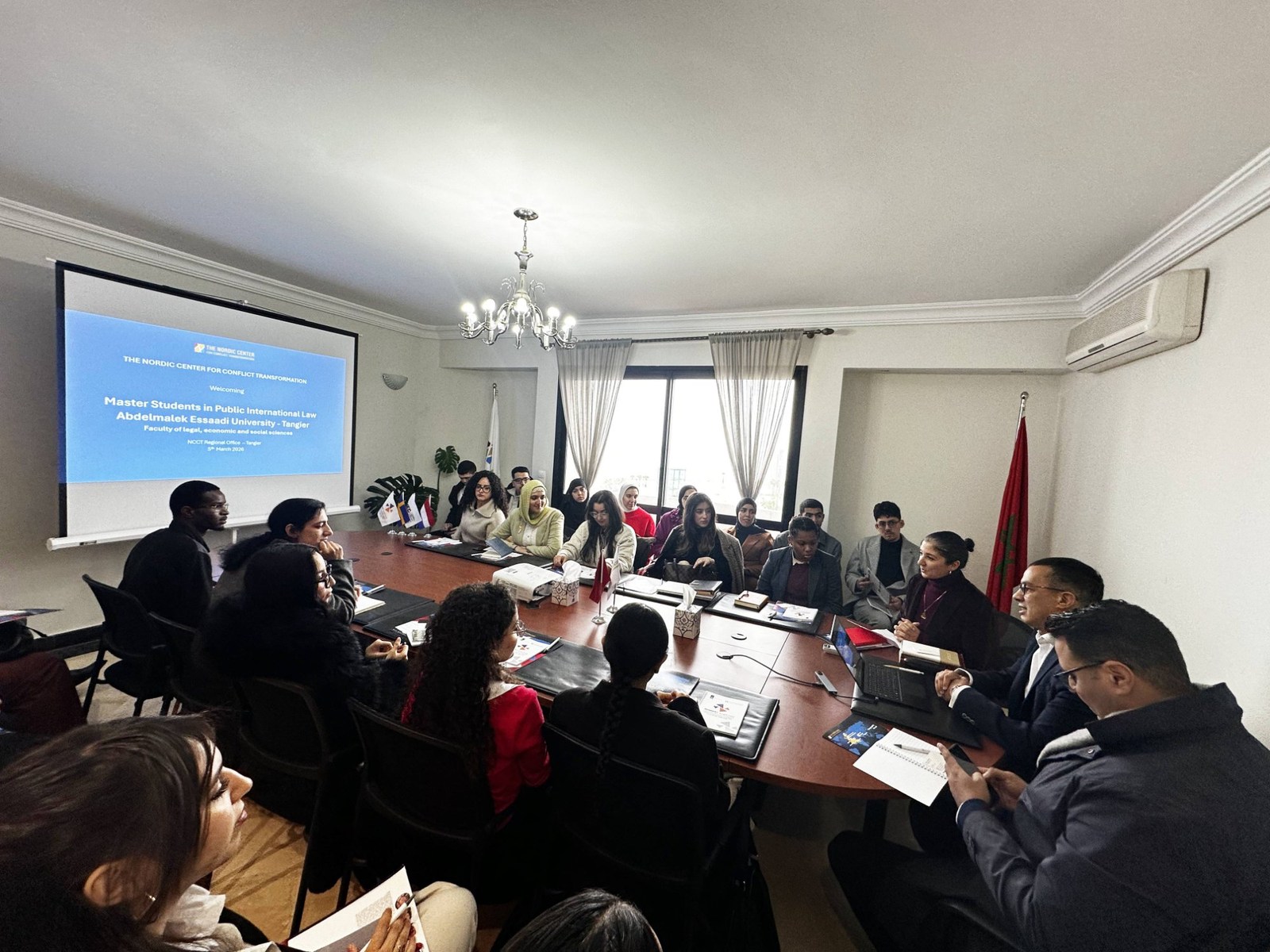
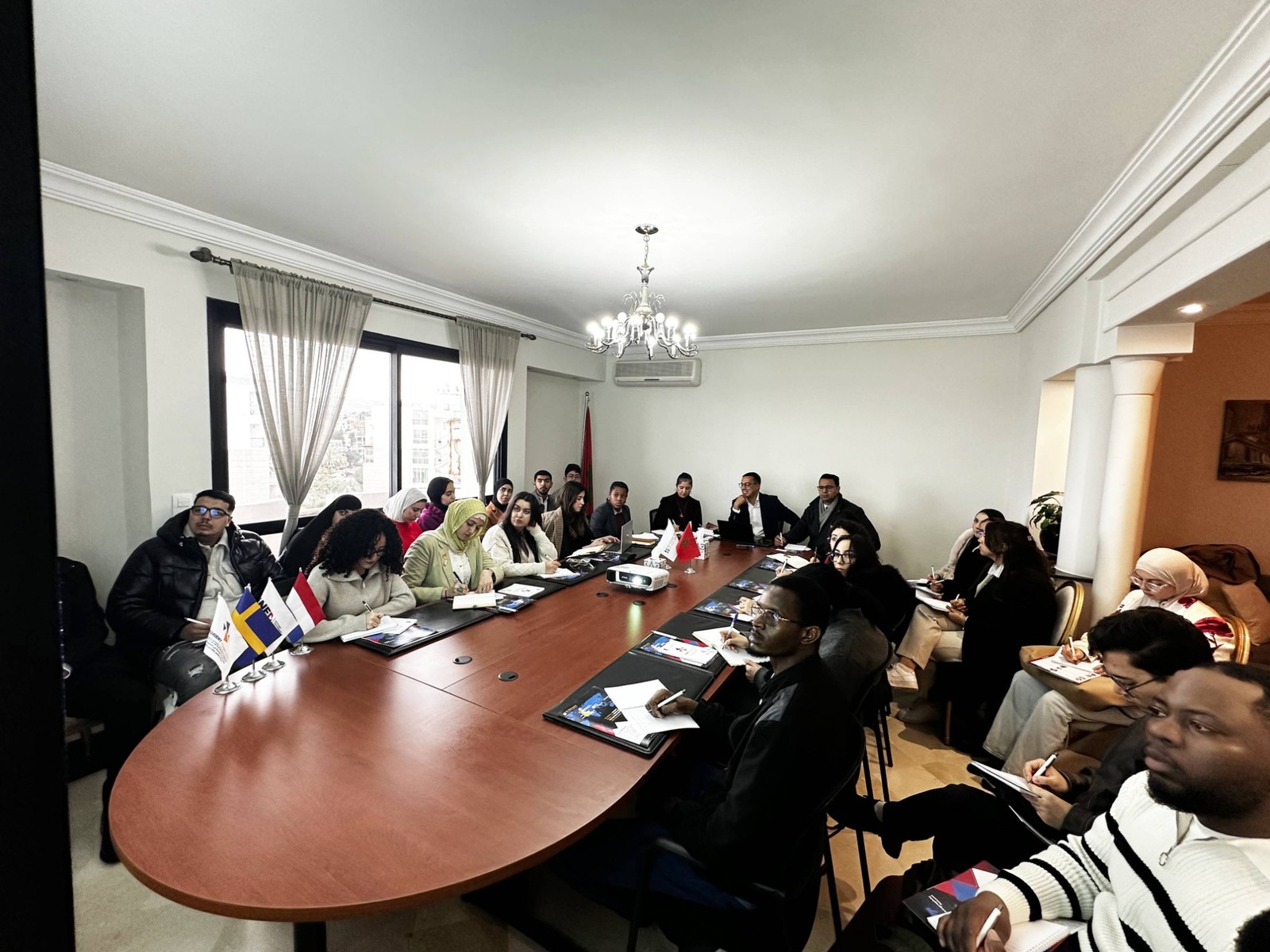
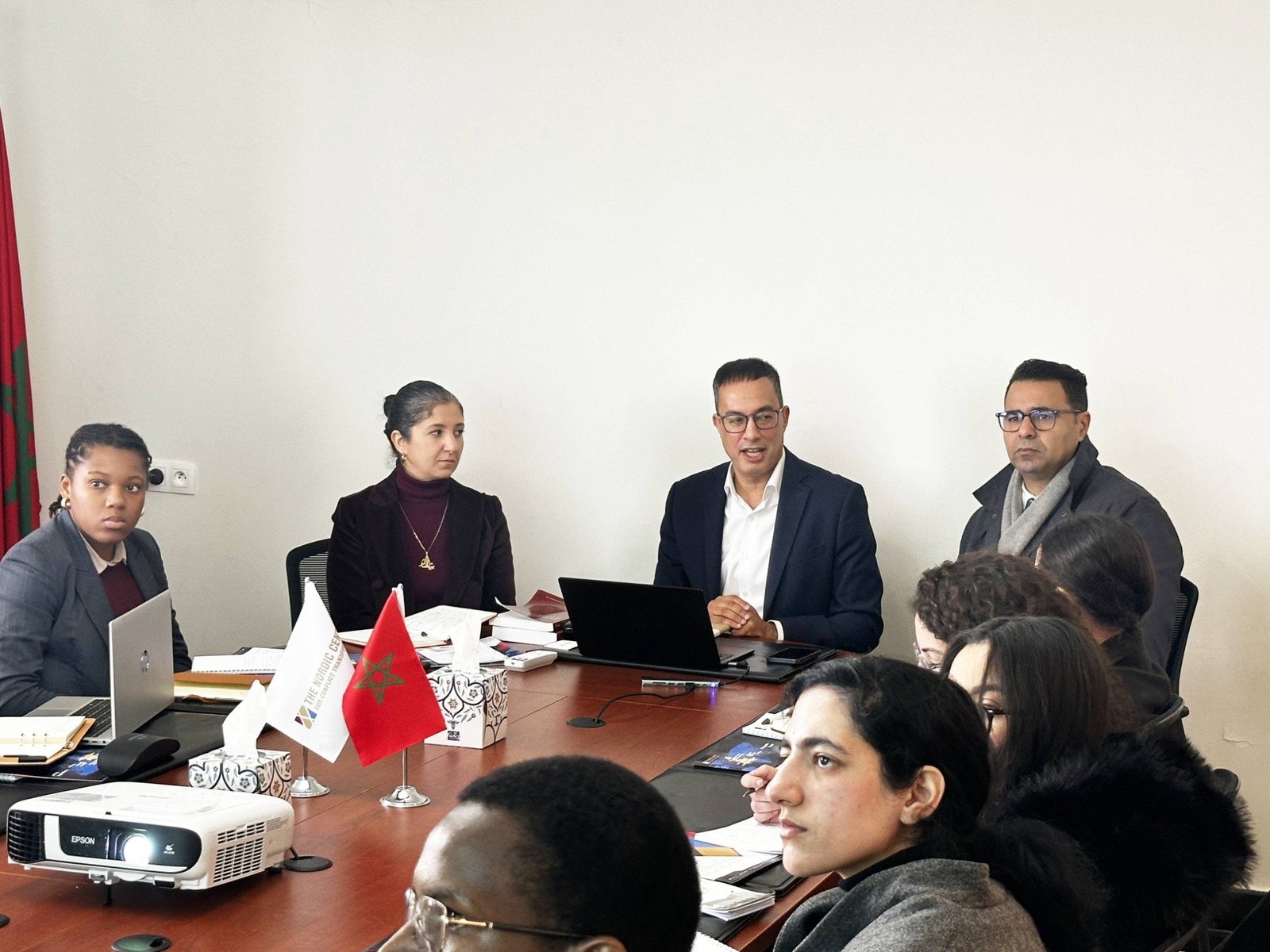
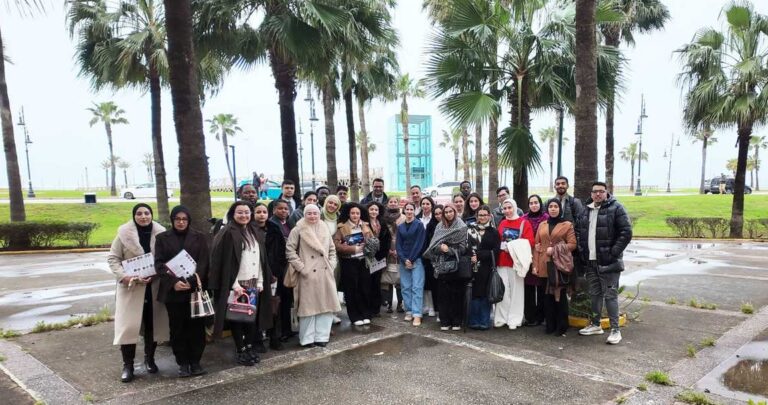
On March 5, 2026, the Nordic Center for Conflict Transformation (NCCT) hosted students from the Master’s program in Public International Law at the Faculty of Legal, Economic, and Social Sciences at the Abdelmalek Essaâdi University in Tangier. Dr. Sarra Sefrioui, Professor of International Law and Coordinator of the Master’s, and Dr. Mohcine Karzazi, Professor of Public Law at the same university, led the students’ delegation. The visit provided an opportunity for students to engage with NCCT’s work and discuss the practical dimensions of international law in the fields of conflict transformation and peacebuilding.
Dr. Sefrioui delivered the opening remarks, during which she introduced the Master’s program in Public International Law and highlighted its objective of equipping students with both a strong theoretical foundation and a critical understanding of contemporary international legal challenges. She presented the academic focus of the program, which seeks to familiarize students with the main branches of international law while encouraging them to engage with current global debates and evolving legal frameworks. She also emphasized the importance of exposing students to practical perspectives and institutional experiences beyond the classroom, such as the work of international organizations working in the field of conflict and peace.
During the session, Noufal Abboud, Executive Director of NCCT, delivered a guest lecture on “International Law in a World of (Dis)Order: A Conflict Transformation Perspective” that began with an overview of the current global context. He discussed the evolving state of the world, touching on issues such as the rise of terrorism, global peace and militarization trends, and the broader geopolitical tensions shaping international relations today. This contextual overview served as an entry point for examining how contemporary challenges influence the relevance and development of international law.
His intervention then explored critical debates within the field of international law, including whether international law can be considered a “discipline of crisis,” a concept discussed by Hilary Charlesworth, and whether international law can ever be viewed as a perfect legal system. Drawing on these debates, the lecture examined the ways in which crises, conflicts, and exceptional situations often shape both the development and the practical relevance of international law.
Abboud also discussed the role of crises and incidents in driving the evolution of international legal norms, noting that international lawyers frequently focus on moments of instability or conflict because these situations highlight the urgency and relevance of their work and the immediate application of international legal frameworks. Within this context, he introduced the concepts of preventive and preemptive self-defense, discussing how these doctrines are debated within customary international law and how they relate to the perception and interpretation of imminent threats.
The lecture further explored critical perspectives within international legal scholarship. Abboud introduced students to the Critical School of International Law, highlighting the work of Martti Koskenniemi and particularly his influential book The Politics of International Law. Through this discussion, students were encouraged to reflect on the political dimensions of legal interpretation and the broader power structures that shape international legal discourse.
In addition, the session addressed alternative theoretical approaches that seek to broaden the understanding of international law, including feminist theories of international law and scholarship focused on the decolonization of international legal frameworks. These perspectives emphasize the importance of examining whose voices and experiences are represented (or excluded) in the formation and application of international legal norms.
Dr. Mohcine Karzazi also intervened during the session, sharing reflections on the relationship between sustainable development in Africa and the persistent security challenges facing the continent. He emphasized that development cannot be examined in isolation from questions of stability, governance, and regional security. He discussed how issues of security are often intertwined with forms of coercion in international relations, particularly in situations where states or external actors seek to influence political outcomes, resource governance, or security arrangements. He also stressed the crucial role of international cooperation in addressing these interconnected challenges. In this regard, he underscored the growing importance of international environmental law, particularly in the African context, where environmental degradation, climate change, and resource scarcity increasingly intersect with development and security concerns.
The lecture was followed by an interactive question-and-answer session, during which students engaged actively with the themes discussed. Among the questions raised were reflections on what constitutes the “normal” state of international relations, whether it is peace or conflict, and inquiries into NCCT’s practical work on the ground. One student asked how the organization concretely works with mothers to transform their roles from passive observers into active leaders and agents of change within their communities.
In response, Abboud highlighted the central role women play in NCCT’s initiatives, particularly in programs focused on prevention, reintegration, and community resilience. He explained that empowering women, especially mothers, has proven to be a key element in strengthening community-level responses to conflict and radicalization, including in regions such as the Sahel. He also emphasized that international law remains central to NCCT’s work, as it provides both a normative framework and practical tools for addressing conflict-related challenges.
Students also raised questions about the role of international and regional organizations, including the African Union and the United Nations, in upholding international law. Others explored comparative perspectives, such as the concept of the “state of exception” in Latin America, particularly in El Salvador, and the role international law can play in such contexts. The discussion concluded with a broader reflection raised by one student: whether the crisis itself or the resolution of the crisis ultimately holds greater importance in the evolution of international law.
The visit concluded in a spirit of constructive dialogue and intellectual exchange. The discussion allowed students to reflect on the ways in which international law operates both as an academic discipline and as a practical tool for addressing contemporary global challenges.